
7 Warning Signs Your Automatic Gearbox Is Failing
An automatic gearbox should deliver smooth, responsive gear changes without hesitation, unusual noises or sudden changes in performance. When something begins to go wrong, however, your vehicle will often show warning signs before the transmission develops a more serious fault.
Recognising the early signs of automatic gearbox problems can help you take action before a minor issue develops into an expensive repair or leaves your vehicle off the road.
At Planet Gears UK, we specialise in gearbox diagnostics, repairs, rebuilds and reconditioned gearboxes from our workshop in Peterborough. Here are seven warning signs that your automatic gearbox may need professional attention.

-
Gearbox slipping is one of the most common symptoms drivers associate with automatic transmission problems.
You may notice the engine revving higher when accelerating without the vehicle increasing speed as expected. The transmission may also struggle to remain in the correct gear or appear to change gear unexpectedly.
Potential causes can include:
Worn internal transmission components
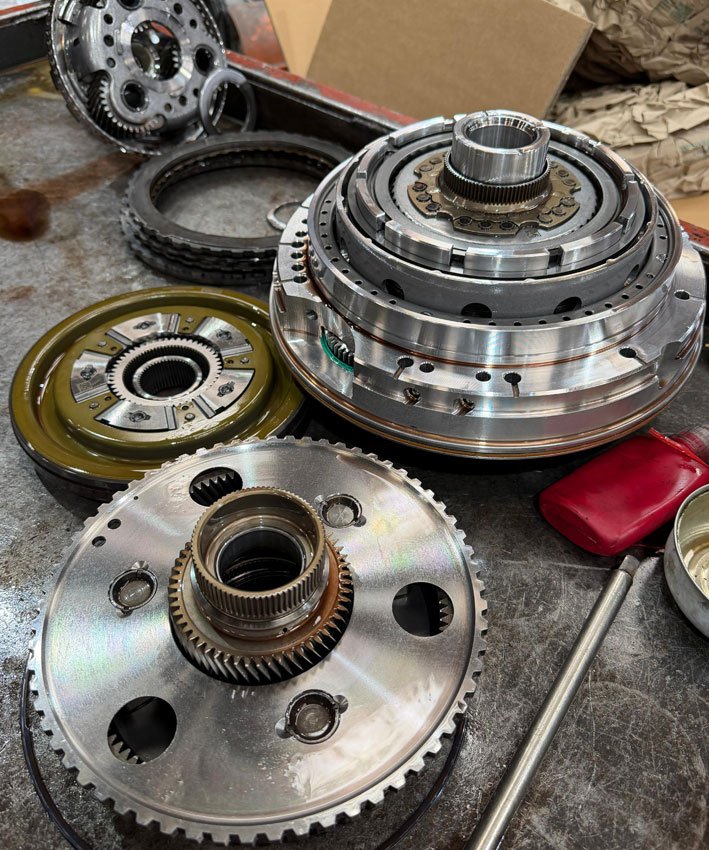
Clutch pack wear
Transmission fluid problems
Hydraulic pressure faults
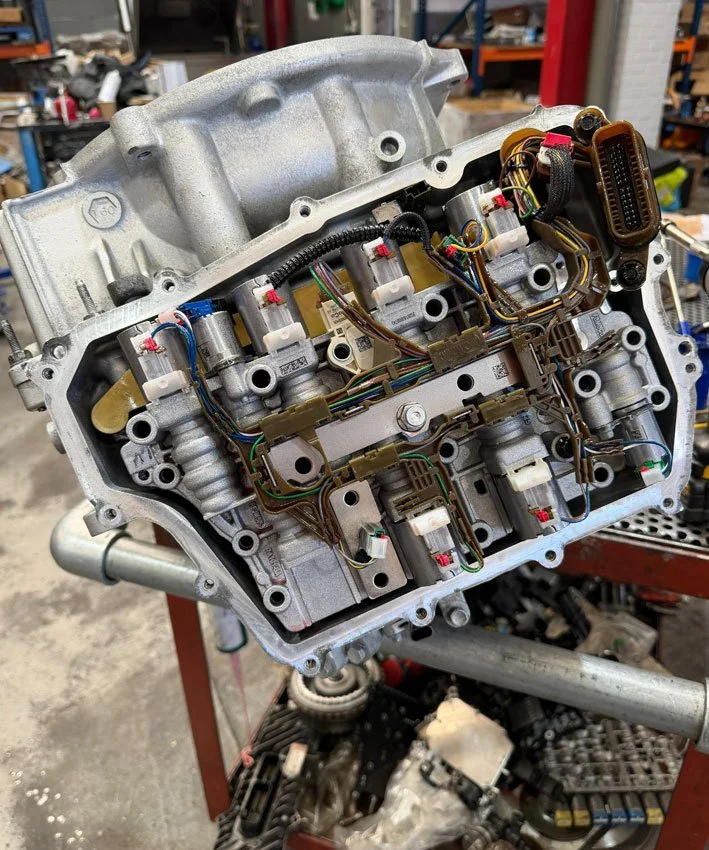
Valve body issues
Solenoid faults
Electronic transmission problems
A slipping gearbox should be investigated rather than ignored.
Continuing to drive with an unresolved transmission problem could increase internal wear and potentially turn a smaller repair into a more extensive gearbox rebuild.
-
There should normally be a quick and smooth response when moving an automatic transmission from Park into Drive or Reverse.
If you select a gear and have to wait before the vehicle begins moving, your gearbox may be developing a fault.
Typical symptoms include:
Delay when selecting Drive
Delay when selecting Reverse
A noticeable thump when the gear engages
Engine revs increasing before movement
Intermittent difficulty selecting a gear
There are numerous potential causes, including transmission fluid issues, hydraulic pressure problems, valve body faults and internal wear.
Because several different problems can produce similar symptoms, proper gearbox diagnostics are essential before deciding what needs repairing.
-
Automatic transmissions are designed to change gears smoothly.
If your vehicle begins jerking, shuddering or producing harsh gear changes, something may not be operating correctly.
You may notice this:
When pulling away
During acceleration
At low speeds
When slowing down
When the gearbox is cold
After the transmission has warmed up
Potential causes can range from fluid and electronic problems to valve body, mechatronic or internal transmission faults.
Different automatic transmission systems also behave differently when developing problems, which is why specialist diagnosis is important.
-
A healthy automatic gearbox shouldn't suddenly start producing unusual mechanical noises.
Sounds to pay attention to include:
Grinding
Whining
Humming
Rattling
Clunking
A new noise doesn't necessarily mean the entire transmission needs replacing, but it shouldn't be ignored.
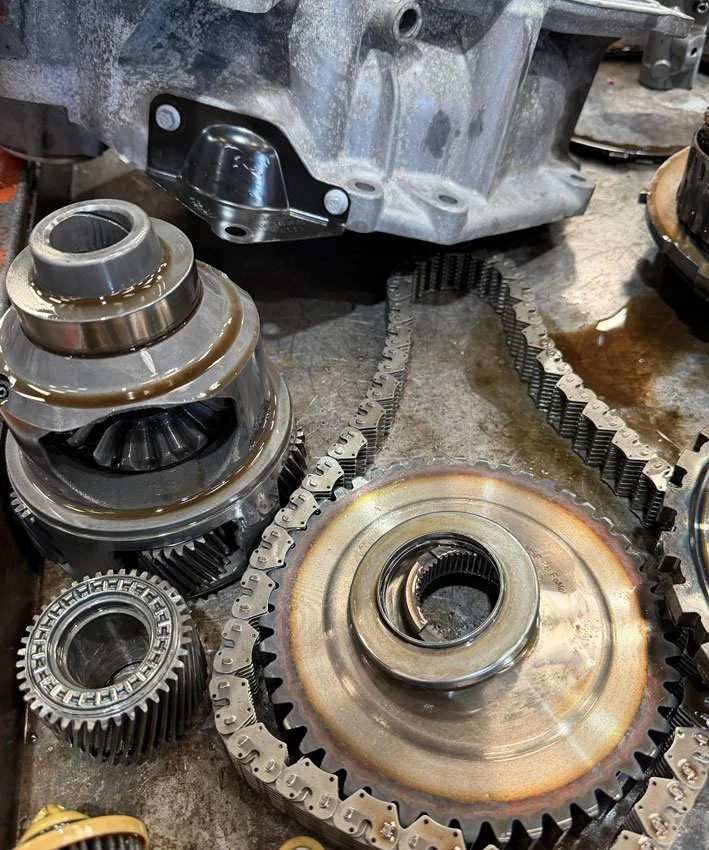
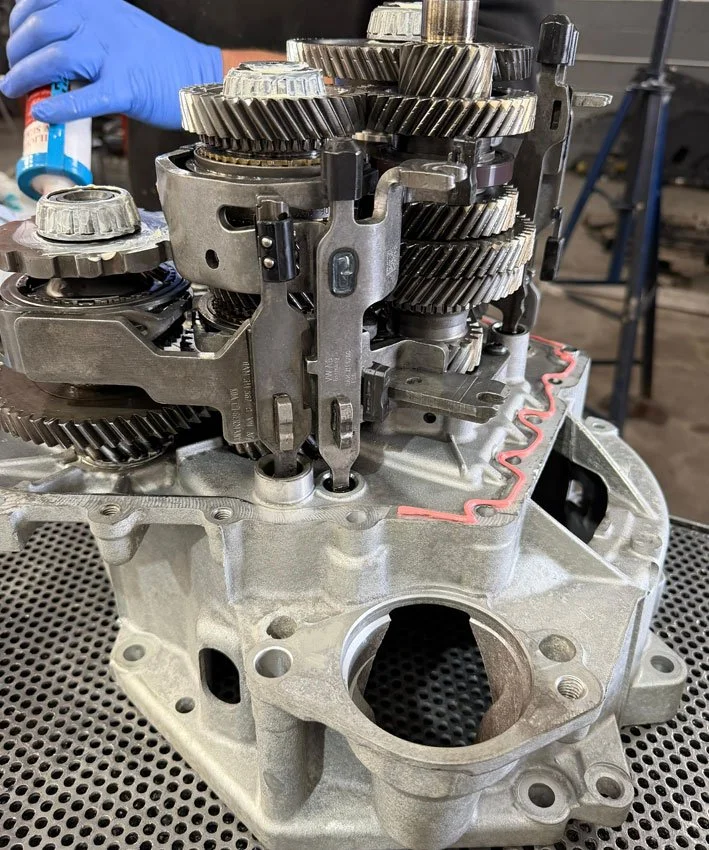
Automatic gearboxes contain numerous bearings, gears, clutch assemblies and other precision components. Wear or damage to one component can eventually affect other areas of the transmission.
Having the gearbox inspected early may help prevent additional damage.
-
Modern vehicles constantly monitor the operation of the engine and transmission.
If the vehicle detects an abnormal reading or transmission fault, it may display a dashboard warning.
Depending on the make and model, you might see:
Transmission warning light
Gearbox malfunction warning
Check engine light
Transmission fault message
Restricted performance warning
The warning itself doesn't tell you exactly what has failed.
The fault could involve a sensor, solenoid, electrical connection, mechatronic unit, transmission control system or mechanical component.
Professional diagnostic equipment can retrieve stored fault codes and provide important information to help determine the actual cause.
-
Item descriptionIf a vehicle's control system detects a potentially serious fault, it may activate limp mode.
This limits vehicle performance to reduce the risk of further mechanical damage.
When transmission-related limp mode occurs, you may experience:
The gearbox remaining in one gear
Reduced acceleration
Limited engine performance
Gear changes becoming unavailable
Transmission warnings appearing on the dashboard
Restarting the vehicle may sometimes temporarily remove limp mode, but that doesn't mean the underlying fault has been repaired.
If limp mode repeatedly returns, the vehicle should be professionally diagnosed.
-
Transmission fluid is critical to the operation of many automatic gearboxes.
It provides lubrication and cooling and, in many transmissions, is also essential to hydraulic operation.
A leak can eventually cause:
Poor lubrication
Reduced hydraulic pressure
Increased transmission temperatures
Difficult or delayed gear changes
Internal gearbox damage
Another warning sign is an unusual burning smell.
Overheated transmission fluid or excessive internal friction can indicate a developing problem that needs investigating.
If you discover fluid underneath your vehicle, identifying the source of the leak is more important than simply topping the fluid up.
-
Modern automatic transmissions combine mechanical, hydraulic and electronic systems.
This means gearbox problems can have many different causes.
Some of the most common include:
Internal wear
Transmission fluid deterioration
Incorrect fluid levels
Overheating
Clutch pack wear
Valve body faults
Solenoid failure
Torque converter problems
Mechatronic faults
Bearing wear
Electronic control problems
Previous poor-quality repairs
The symptoms alone don't always reveal which component has failed.
That's why an accurate diagnosis should be the first step before major gearbox work is undertaken.
Low transmission fluid levels
Worn clutch packs
Damaged gear components
Faulty transmission control module
Internal hydraulic issues
Drivers often describe the feeling as the engine revving higher than normal without corresponding acceleration.
-
Yes. Many automatic transmission problems can be repaired.
A gearbox fault does not automatically mean you need a complete replacement transmission.
The best solution depends on the type of gearbox, the fault and the extent of any internal damage.
Automatic Gearbox Repairs
Where the problem is isolated to particular components, it may be possible to repair or replace those parts without rebuilding the entire transmission.
This can provide a considerably more cost-effective solution.
Automatic Gearbox Rebuilds
When significant internal wear or damage has occurred, a gearbox rebuild may be recommended.
The transmission can be removed and dismantled so its internal components can be thoroughly inspected.
Worn or damaged parts can then be replaced before the gearbox is reassembled and tested.
Reconditioned Gearboxes
For some vehicles and transmission faults, a professionally reconditioned gearbox may provide the most practical solution.
The correct approach should always be determined by the condition of the transmission rather than automatically assuming complete replacement is necessary.
-
There are several different types of automatic transmission fitted to modern vehicles.
These include:
Traditional torque converter automatics
DSG transmissions
DCT dual-clutch transmissions
CVT gearboxes
Powershift transmissions
Semi-automatic gearboxes
Each transmission system operates differently and can develop its own characteristic faults.
Specialist gearbox knowledge is therefore particularly important when diagnosing modern transmission problems.
-
That depends on the severity of the fault, but continuing to drive with significant gearbox symptoms isn't recommended.
If the transmission is slipping, overheating or operating with incorrect fluid pressure, continuing to drive could cause additional internal damage.
Particular attention should be paid to symptoms such as:
Severe gearbox slipping
Loss of Drive or Reverse
Grinding noises
Burning smells
Transmission fluid leaks
Repeated limp mode
Major delays when selecting gears
If you're unsure whether your vehicle is safe to drive, speak to a gearbox specialist before continuing your journey.
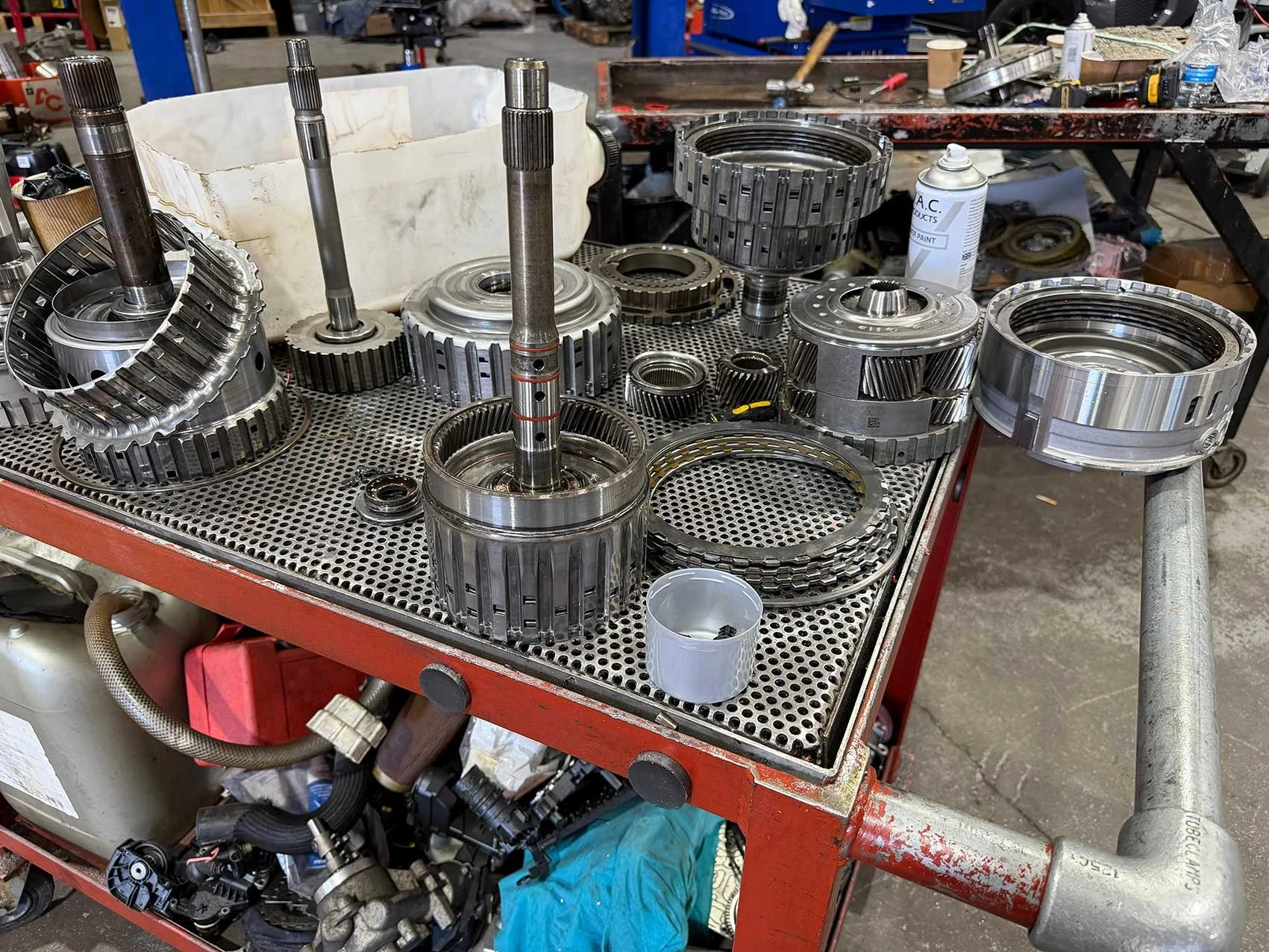
Automatic Gearbox Repairs in Peterborough
If you're experiencing gearbox slipping, rough gear changes, transmission warning lights or another automatic gearbox problem, Planet Gears UK can help.
Based in Peterborough, we provide professional gearbox diagnostics, repairs, rebuilds and reconditioned gearbox solutions for a wide range of vehicles and transmission types.
Correctly diagnosing the problem is an important first step.
Rather than assuming the entire gearbox needs replacing, our specialists can investigate the fault and determine the most appropriate repair option for your vehicle.
Frequently Asked Questions About Automatic Gearbox Problems
-
Common early symptoms include slipping gears, delayed engagement, rough gear changes, unusual noises and transmission warning lights. Changes in how your vehicle selects or changes gears should be investigated.
-
Jerking can have several causes, including transmission fluid problems, valve body faults, solenoid issues, mechatronic problems or internal wear. A diagnostic inspection is required to determine the exact cause.
-
Gearbox slipping can be caused by worn clutch components, transmission fluid problems, incorrect hydraulic pressure or internal transmission faults.Common causes include worn internal components, mechatronic unit failure, low fluid levels, overheating, and lack of maintenance.
-
In many cases, yes. Individual components may be repairable or the gearbox may be professionally rebuilt. Complete replacement isn't automatically necessary every time a gearbox develops a fault.
-
The cost depends on the vehicle, transmission type, fault and extent of any internal damage. Diagnostic testing is usually required before an accurate repair quotation can be provided.
-
A transmission warning shouldn't be ignored. The severity of the problem can vary considerably, so having the vehicle professionally diagnosed is advisable before continuing to drive extensively.
Experiencing Automatic Gearbox Problems?
Automatic transmission faults are often easier and less expensive to address when they're diagnosed early.
If your vehicle is slipping gears, jerking between gears, struggling to select Drive or Reverse, entering limp mode or displaying a transmission warning, contact Planet Gears UK.
Our gearbox specialists in Peterborough can diagnose the problem and advise you on the appropriate repair, rebuild or reconditioned gearbox solution.
Contact Planet Gears UK today to discuss your automatic gearbox problem or arrange a professional gearbox inspection.
☎️ Call us today — our specialists are ready to help.